Introduction
Moroccan cuisine is a vibrant and diverse culinary tradition that represents a fusion of flavors, cultures, and histories. This North African country has been a crossroads for various civilizations, each leaving an indelible mark on its gastronomy. From the aromatic spices of the Arab world to the earthy flavors of Berber cooking, Moroccan cuisine offers a rich tapestry that captivates the senses and tells a story of cultural exchange.
The Influence of History and Geography
The geographical diversity of Morocco, from its coastal regions to the Atlas Mountains and Saharan desert, plays a significant role in shaping its culinary identity. The country’s location as a gateway between Europe and Africa has also facilitated a melting pot of influences. The Phoenicians, Romans, Arabs, and French have all contributed to the country’s culinary evolution, resulting in a cuisine that is both exotic and familiar.
The Berber Roots
At the heart of Moroccan cuisine are the Berber people, the indigenous inhabitants of North Africa. Their culinary traditions are grounded in the use of local ingredients and age-old techniques. Staple foods such as couscous and tagine are integral to Berber cooking, embodying the simplicity and resourcefulness of these ancient people. Berber dishes often feature ingredients like olives, dates, and almonds, which thrive in the Moroccan climate.
Arab Influence
The Arab conquest of Morocco in the 7th century brought with it a wealth of spices and gastronomic wisdom. Saffron, cumin, cinnamon, and ginger became cornerstones of Moroccan cooking, infusing dishes with warmth and complexity. The Arabs also introduced new cooking techniques, such as the use of stews and slow-cooking methods, which are now essential to Moroccan cuisine.
European and Sub-Saharan African Contributions
The arrival of the Moors from Andalusia in the 15th century and the later French colonial influence introduced European elements into Moroccan cooking. Ingredients such as tomatoes, potatoes, and peppers became integrated into traditional recipes. Additionally, the trans-Saharan trade routes facilitated the exchange of goods and culinary ideas with sub-Saharan Africa, enriching the Moroccan diet with ingredients like millet and okra.
Key Ingredients in Moroccan Cuisine
Moroccan cuisine is characterized by its bold flavors and vibrant colors, achieved through the careful selection and combination of ingredients. Here are some of the key components that define Moroccan cooking:
Spices
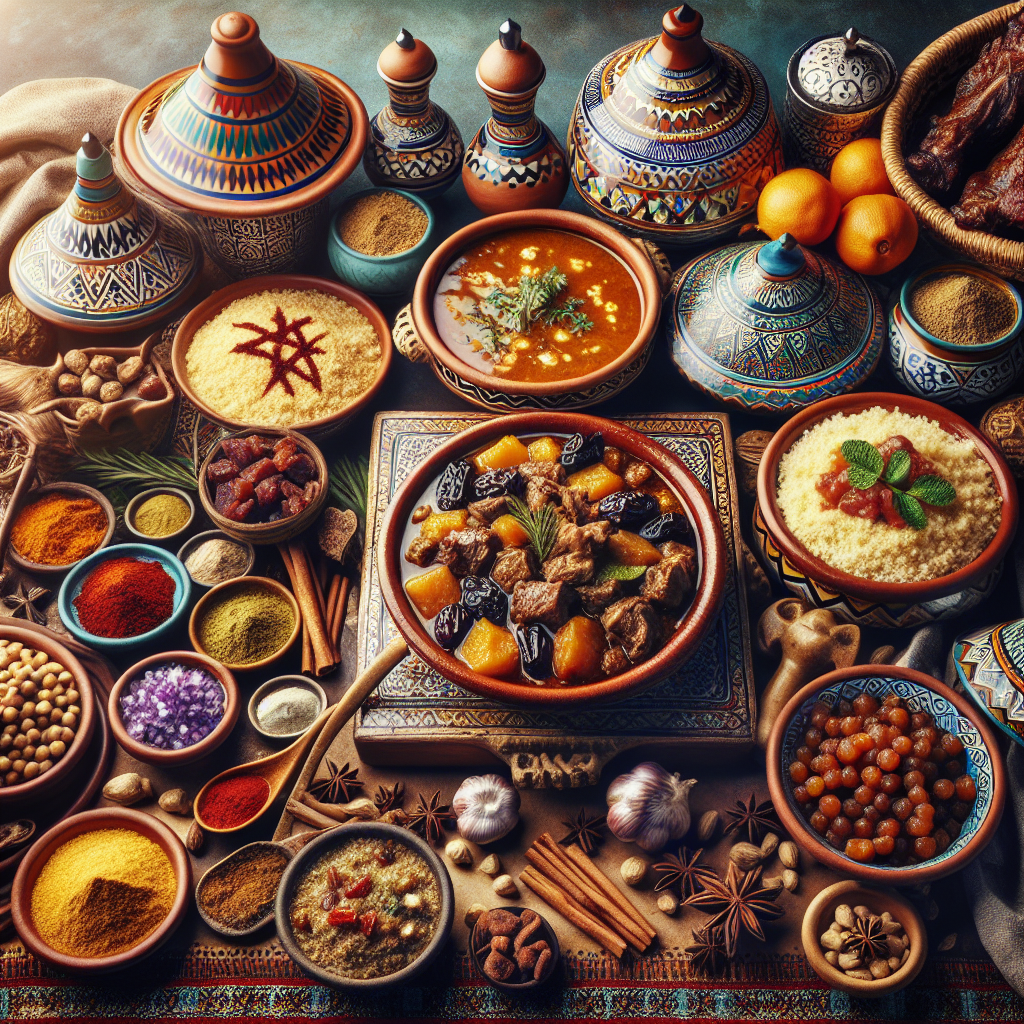
Moroccan chefs are masters of spice, using them not just to add heat, but to create depth and harmony in their dishes. Ras el hanout, a complex blend of spices that can include up to 30 different ingredients, is a quintessential Moroccan spice mix. It typically contains cardamom, clove, cinnamon, paprika, coriander, cumin, nutmeg, peppercorn, and turmeric.
Couscous
Often considered the national dish of Morocco, couscous is made from steamed semolina grains and is traditionally served with a meat or vegetable stew. It is a versatile dish that can be adapted to suit various tastes and occasions, ranging from simple family meals to elaborate feasts.
Preserved Lemons
Preserved lemons are a distinctive ingredient in Moroccan cuisine, adding a unique tangy and salty flavor to dishes. They are made by fermenting lemons in a mixture of salt and their own juices, and are commonly used in tagines, salads, and sauces.
Iconic Moroccan Dishes
Moroccan cuisine boasts an array of iconic dishes that are celebrated for their flavor and cultural significance. Here are a few that stand out:
Tagine
Named after the earthenware pot in which it is cooked, tagine is a slow-cooked stew that can include a variety of ingredients such as lamb, chicken, fish, or vegetables. The dish is known for its rich sauces and the combination of savory and sweet flavors, often achieved by incorporating fruits like apricots, prunes, and raisins.
Harira
Harira is a traditional soup made from tomatoes, lentils, chickpeas, and a blend of herbs and spices. It is particularly popular during Ramadan, when it is served to break the fast. The soup is hearty and nourishing, reflecting the Moroccan emphasis on using wholesome ingredients.
B’stilla
B’stilla, also known as pastilla, is a savory pie that encapsulates the complexity of Moroccan cuisine. It is traditionally made with pigeon meat (though chicken is a common substitute), layered with almonds and spices, and encased in a delicate pastry shell. The pie is dusted with powdered sugar and cinnamon, creating a delightful contrast of flavors.
The Art of Moroccan Hospitality
Moroccan hospitality, known as “diyafa,” is legendary. The sharing of food is a central aspect of this tradition, with meals often being communal affairs that bring families and friends together. Moroccan hosts take great pride in offering generous spreads, showcasing their culinary skills and the richness of their culture.
Tea Culture
No discussion of Moroccan hospitality would be complete without mentioning its tea culture. Mint tea, or “atay,” is a symbol of warmth and welcome in Moroccan homes. Prepared with green tea, fresh mint leaves, and sugar, it is served with great ceremony and is an integral part of social gatherings.
Mealtime Traditions
In Morocco, meals are more than just a time to eat; they are an opportunity to connect with loved ones and celebrate life. Traditional meals are often eaten communally, with diners seated around a low table, sharing dishes from a central platter. Eating with the hands, using bread to scoop up food, is a common practice that reinforces the communal nature of the meal.
Conclusion
Moroccan cuisine is a testament to the country’s rich history and cultural diversity. Its flavors are bold and evocative, its ingredients are fresh and wholesome, and its dishes are crafted with care and tradition. To explore Moroccan cuisine is to embark on a journey through time and place, discovering the stories and people that have shaped this remarkable culinary heritage. Whether savoring a fragrant tagine or sharing a pot of mint tea, Moroccan cuisine invites us to experience the richness of its tapestry, one delicious bite at a time.
#ChatGPT ha collaborato alla creazione di questo articolo.