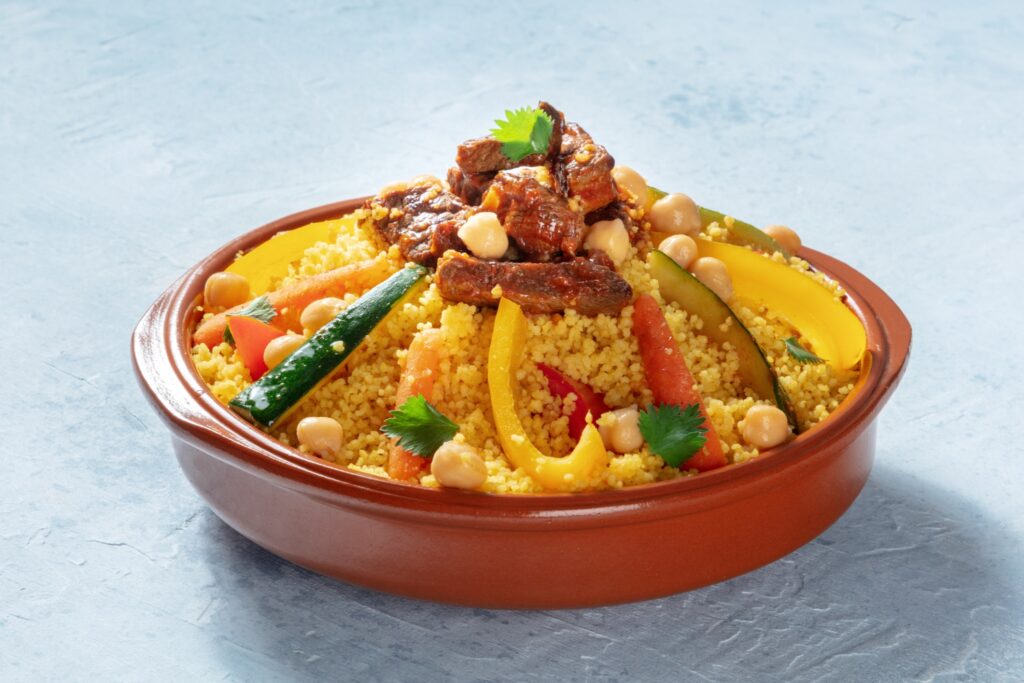
Meat and vegetable couscous in a bowl, typical food from Morocco, a traditional festive Arabic dish with herbs and spices
Moroccan cuisine is a tantalizing blend of flavors, aromas, and textures that reflect the country’s rich history and diverse cultural influences. With a culinary heritage that has been shaped by Berber, Arab, Andalusian, and French influences, Moroccan food is known for its bold spices, vibrant colors, and exquisite taste. The cuisine is a feast for the senses, inviting those who experience it to embark on a culinary journey through Morocco’s bustling medinas, serene landscapes, and lively souks.
The Foundation: Key Ingredients and Spices
At the heart of Moroccan cuisine are its key ingredients and spices, which form the foundation of its unique flavor profile. Spices such as cumin, coriander, saffron, cinnamon, ginger, and paprika are used extensively, either alone or in combination, to create complex and aromatic dishes. The use of fresh herbs like parsley, cilantro, and mint further enhances these flavors, adding a fresh and vibrant touch.
Olive oil is a staple in Moroccan cooking, providing a rich and earthy base for many dishes. Preserved lemons, olives, and dried fruits like apricots and raisins are also frequently used, contributing to the distinctive sweet and savory balance that characterizes many Moroccan recipes.
Iconic Moroccan Dishes
Moroccan cuisine is home to a variety of iconic dishes that showcase its rich and diverse flavors. Here are a few notable examples:
Tagine
The tagine is perhaps the most famous Moroccan dish, named after the conical clay pot in which it is traditionally cooked. This slow-cooked stew is made with a variety of ingredients, including lamb, chicken, beef, or vegetables, and is flavored with a blend of spices, dried fruits, and nuts. The unique shape of the tagine pot helps to seal in moisture and flavor, resulting in a tender and aromatic dish that is usually served with couscous or bread.
Couscous
Couscous is a staple in Moroccan cuisine, made from steamed semolina grains. It is often served as an accompaniment to tagines or as a standalone dish with a variety of toppings such as vegetables, meats, and a flavorful broth. Couscous is traditionally prepared with great care and is a symbol of hospitality in Moroccan culture.
Harira
Harira is a hearty soup that is especially popular during the month of Ramadan. Made with tomatoes, lentils, chickpeas, and a blend of spices, this comforting dish is often enjoyed with dates and chebakia, a sweet pastry, to break the fast. Harira is known for its warming properties and rich, savory taste.
Briouats
Briouats are small savory pastries filled with a mixture of meat, cheese, or vegetables, wrapped in thin phyllo dough, and fried until crispy. These delicious bites are often served as appetizers or snacks and are a testament to the Moroccan love of combining textures and flavors.
Moroccan Sweets and Desserts
Moroccan sweets and desserts are a delightful end to any meal, showcasing the country’s love for sweet flavors and intricate designs. Traditional sweets often incorporate ingredients like almonds, honey, and fragrant orange blossom water.
Baklava
Moroccan baklava is a sweet pastry made with layers of phyllo dough, nuts, and honey, similar to its Middle Eastern counterpart but often flavored with distinct Moroccan spices and essences.
Seffa
Seffa is a sweet couscous dish flavored with cinnamon, sugar, and almonds, often served as a dessert. It is characterized by its fluffy texture and aromatic flavors, providing a sweet contrast to the savory dishes typically enjoyed during a Moroccan meal.
The Art of Moroccan Tea
No exploration of Moroccan cuisine would be complete without mentioning Moroccan tea, a cultural staple that is synonymous with hospitality and friendship. Moroccan mint tea, also known as “atay,” is made from green tea leaves, fresh mint, and sugar. It is traditionally prepared with great care and served in ornate teapots and glasses. The ritual of pouring tea from a height to create a frothy top is an important aspect of its presentation, symbolizing the warmth and generosity of Moroccan culture.
Dining Experience: A Communal Affair
Moroccan dining is a communal experience, often enjoyed with family and friends gathered around a low table laden with a variety of dishes. Meals are typically served in a series of small courses, encouraging diners to share and savor each dish. Hands are often used to eat, with bread serving as the primary utensil for scooping up food.
The concept of “beldi” or rustic, homemade food is highly valued in Moroccan culture, and many dishes are prepared using traditional methods that have been passed down through generations. This emphasis on authenticity and tradition contributes to the rich tapestry of flavors and experiences that define Moroccan cuisine.
Conclusion: Savoring the Exotic Allure
Moroccan cuisine is a celebration of flavors, aromas, and textures that transport diners to a world of exotic allure. With its rich history, diverse influences, and emphasis on communal dining, Moroccan food offers a unique and unforgettable culinary experience. Whether savoring a fragrant tagine, indulging in a sweet pastry, or enjoying a cup of mint tea, Moroccan cuisine invites you to discover the warmth and generosity of its culture, one delicious bite at a time.
As you embark on your own culinary journey through the enchanting world of Moroccan cuisine, remember to take the time to savor each dish, appreciate the artistry behind its creation, and embrace the sense of community that is at the heart of this remarkable culinary tradition.